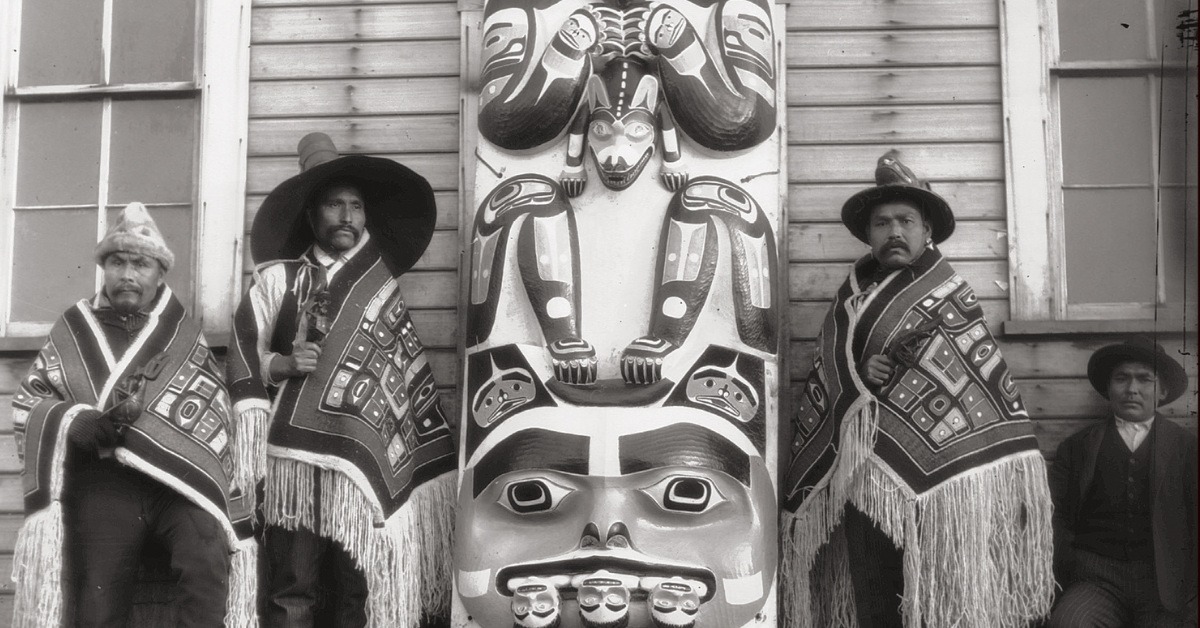
The first-ever collection of the photographs of Elbridge W. Merrill, The Tlingit in Sitka by Sergei Kan (published in association with Sealaska Heritage Institute) offers a rare window into the changing lives of Alaska Natives between the late 1800s and 1920s.

Lured north by the Klondike gold rush, Merrill settled in Sitka and took up a career as a professional photographer. He developed a good rapport with the town’s Indigenous Tlingit community, who came to call him “the father of pictures.”
The Tlingit in Sitka collects Merrill’s photographs of important Tlingit events like funerals and famous ku.éex’ (potlatch), commissioned portraits, and subsistence activities and other scenes of everyday life. Respected and admired by Sitka’s entire multiethnic community, Merrill also photographed locals with Russian-Native Alaskan ancestry and Euro-American backgrounds and expressed a passion for Alaska’s spectacular settings through images of nature.
“We, the Indigenous people of Southeast Alaska, are forever indebted to Elbridge W. Merrill for his photographic documentation of Tlingit life,” writes Rosita Kaaháni Worl in the foreword to the book. “That he was held in equal regard by the Tlingit is apparent from the fact that they allowed him to photograph their ceremonial and private lives—a privilege that even today is granted to only a few individuals.”
The following photographs are excerpted from The Tlingit in Sitka: The Photography of Elbridge W. Merrill by Sergei Kan.


Sergei Kan is professor of anthropology at Dartmouth College. He is author of Symbolic Immortality: Tlingit Potlatch of the Nineteenth Century and A Russian American Photographer in Tlingit Country: Vincent Soboleff in Alaska.
Related Books