
Visitors to Discovery Park in Seattle will soon encounter a significant but overlooked piece of civil rights history, thanks in part to a book that brought the incident to the nation’s attention years before.
New signage installed at Fort Lawton, the former US Army post that was given to the City of Seattle and later dedicated as Discovery Park, will honor twenty-eight exonerated Black soldiers who were wrongly convicted after a series of tragic events that took place there during World War II.
On the night of August 14, 1944, an Italian prisoner of war was lynched at Fort Lawton—a murder that shocked the nation and the international community. It was a time of deep segregation in the army, and the War Department was quick to charge three Black soldiers with first-degree murder, although there was no evidence linking them to the crime. Forty other Black soldiers faced lesser charges over the incident, launching one of the largest and longest army trials of World War II. The defendants shared just two army lawyers between them who were given just ten days to prepare their case, even as some faced the death penalty.

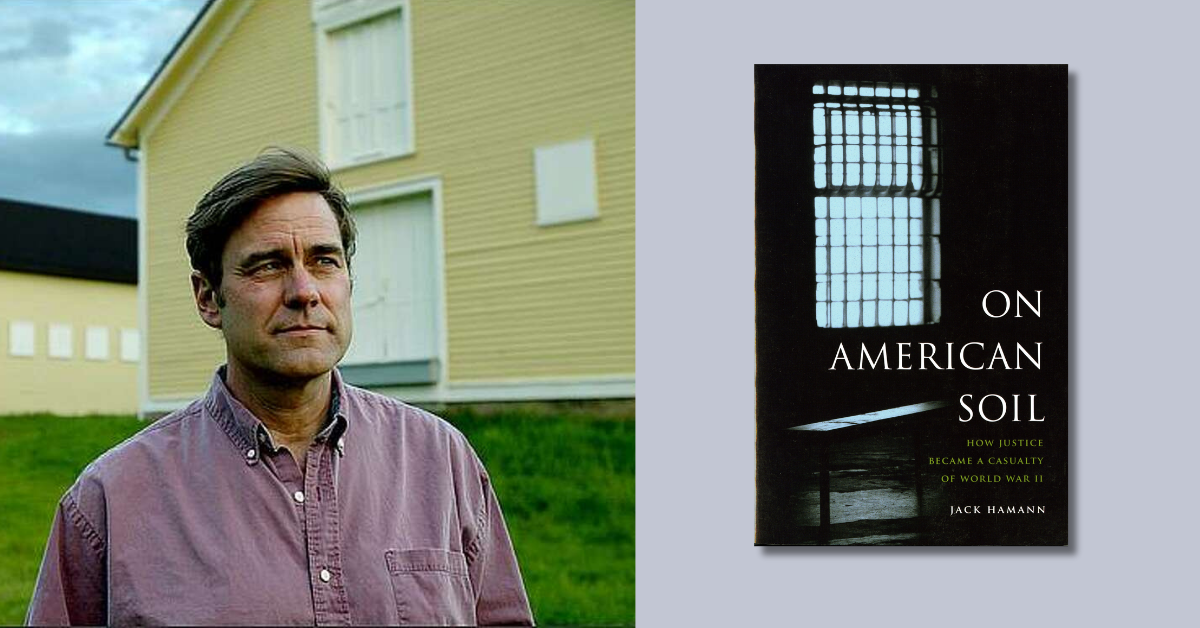
Despite the eventual conviction of twenty-eight soldiers, it was later revealed through the research of journalists Jack Hamann and his wife, Leslie, that the prosecution, led by Leon Jaworski, was aware of flaws in the case but proceeded anyway. The Hamann’s findings, published in the book On American Soil, led to a congressional inquiry in 2006.
As a result, the army’s highest court of appeals overturned all the convictions, issued honorable discharges, and offered reparations to the defendants and their families. However, only two defendants lived long enough to receive apologies, with one dying shortly after his exoneration. Some families of the defendants have not yet been located.
The Friends of Discovery Park will unveil new signage commemorating these soldiers on Saturday, October 19, from 10:00 a.m. to noon at the Discovery Park Visitor Center. The event will feature guest speakers, including author Jack Hamann.
What was the driving force behind the writing of On American Soil?
A mysterious headstone stands sentry in a forgotten graveyard in the Fort Lawton Cemetery at Discovery Park. Thirty-seven years ago, my first attempt to unlock the story of the man buried beneath the strange column revealed a shocking set of circumstances connected to his death: A lynching of a prisoner of war in Seattle—allegedly by a mob of African Americans—that resulted in the largest and longest army court-martial of World War II, led by prosecutor Leon Jaworski. It was as unlikely an event as I could imagine, and one that almost no one in our community knew anything about.

In the 1980s, my first attempt to explore and explain the story of the 1944 murder of Private Guglielmo Olivotto was hobbled by a lack of time, money, and experience. At the time, my reports were primarily a rehash of the stories filed by journalists during the long, emotionally charged trial, aided by face-to-face conversations with several of the forty-three Black soldiers who stood trial for murder and/or rioting. For years afterward, I was haunted by their assertions of innocence, despite what appeared to be the US Army’s best efforts to sort out justice.
When the youngest of our two children left for college, my wife, Leslie, and I decided to revisit the story, driven by the nagging suspicion that neither we—nor the reporters in 1944—had gotten the story right. As it turned out, our suspicions were well-founded.
The book closely examines an incident of racial injustice in Seattle’s history. In your research and writing, how do you see these attitudes evolving?
I grew up believing that lynchings were primarily a scourge of the Deep South. Like many northwesterners, I assumed that our region had a relatively benign racial history. My research helped me understand just how wrong I could be.
The very first European settlements on Elliott Bay eventually adopted the hostile relations with Native peoples that plagued most of the Western Hemisphere. Soon after, migrant laborers from China suffered brutal attacks and discrimination once the backbreaking task of building rail lines was complete. For decades, Seattle’s African Americans were denied housing in all but a few neighborhoods and suffered exclusion and indignities throughout the region. Against this backdrop, thousands of Black Americans came to the Northwest during World War II, either as soldiers or seeking employment in the defense supply industry.
The tragic murder at Fort Lawton was inexorably linked to the segregation and racism of the day. As it turned out, influential people within the Truman White House understood the connection and cited the Fort Lawton incident in the successful efforts to desegregate the armed forces and to revise the military’s code of justice.
As an investigative journalist and documentary producer, what was the most exciting part of your work on this book?
During our years of research, my wife and I identified the names of more than three hundred people who were in some way connected to the Fort Lawton lynching and court-martial. The tedious process of trying to determine the whereabouts of these people—or their survivors—always carried the promise of another “Eureka!” moment, when we actually reached someone by telephone or met them face to face. Many of these sources provided crucial details or helped us understand otherwise confusing inconsistencies. It was always exciting to hear the voice of someone whose long-ago words we had been reading on yellowed paper.
A real highlight was our visits to presidential libraries and to the National Archives in College Park, Maryland. It was there, after weeks of dead ends, that Leslie located the smoking gun: an amazing, lengthy report prepared by a larger-than-life army general named Elliot Cooke. The Cooke Report, as it was known, had been buried in the archives for decades, but it contained the real secrets of the Fort Lawton incident, and made the entire book possible. We knew almost immediately that a much richer and more accurate picture would emerge from that report.
Your history-making investigation shared in On American Soil was widely covered in the media and yet this notable civil rights event has remained hidden to many, particularly for new generations of Seattleites. What do you hope visitors to Discovery Park will gain from the commemorative signage that was inspired by your book?
From the moment of their earliest forced arrival as enslaved chattel, Black Americans have been treated as the “other,” subjected to relentless discrimination by our Constitution, our laws and our culture. Although the arc of history has bent ever so slowly toward justice, Black soldiers during World War II were still treated in most respects as second-class citizens. When a murder was committed on August 14, 1944, certain army officials felt entitled to “round up the usual suspects,” and to treat the defendants less as individuals and more as an interchangeable group. As much as anything, that explains how this injustice went unnoticed and uncorrected for more than forty years.
I hope the new Discovery Park signs will encourage visitors to learn more about this crucial piece of our shared history—the largest and longest US Army court-martial of World War II and the only time in American history that Black men have stood trial charged with a mob lynching—and consider whether its lessons still resonate today. In some settings, are Black Americans still treated as the “other,” and thus subjected to different, unjust standards? Do other non-majority populations face similar wrongs and indignities because of their race, religion or heritage? Learning the lessons of the Fort Lawton court-martial may help a new generation remain vigilant and understand the unrecoverable costs of discrimination, racism, and injustice.


