Every November, we mark Native American Heritage Month as a time to uplift the traditions, languages, and stories of Native American and Alaska Native communities, ensuring their contributions and histories remain visible. Here, Indigenous authors offer book recommendations that center Native authors and experiences.
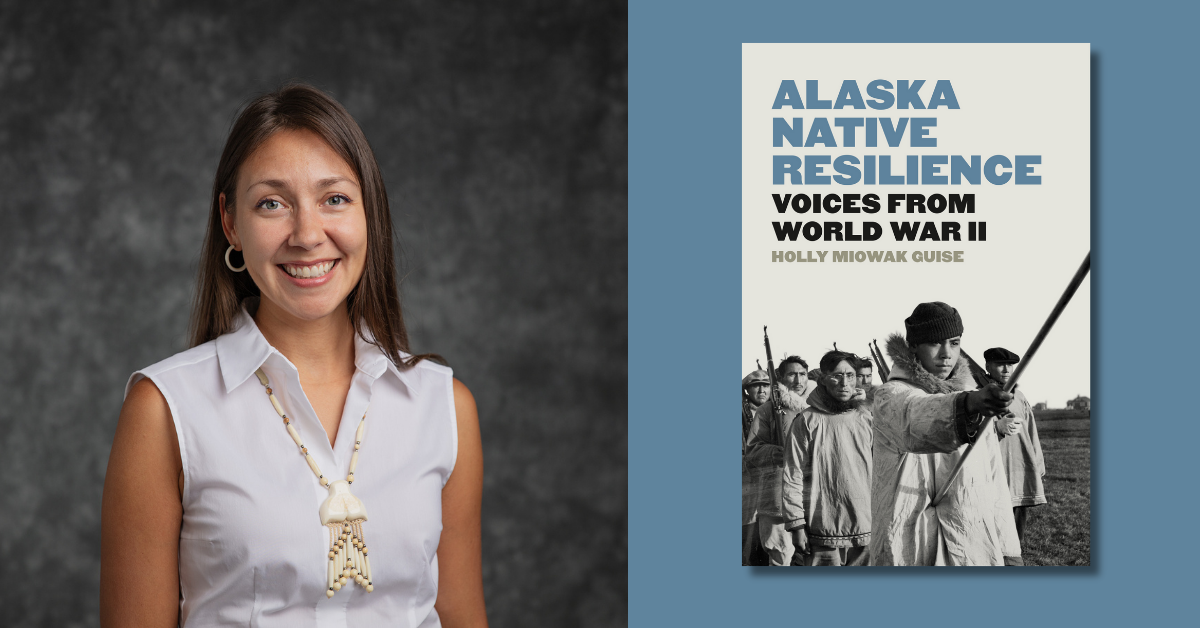
Holly Miowak Guise (Iñupiaq), author of Alaska Native Resilience, recommends Refusing Settler Domesticity by Caitlin Keliiaa and Unrecognized in California by Olivia M. Chilcote:
“Caitlin Keliiaa’s Refusing Settler Domesticity: Native Women’s Labor and Resistance in the Bay Area Outing Program is a dynamic read about the centrality of Native women’s history and labor in the twentieth century. Keliiaa shows that the ‘outing’ program—designed to assimilate Native girls to US Westernization while extracting their labor as domestic servants— presented obstacles to many Native girls in education who remained resilient despite colonial structures of control in education and within privately-owned domestic Western homes. Keliiaa has pieced together a powerful narrative of Native women banding together to support each other despite obstacles of assimilation. Urban history, Indigenous history, gender history, and labor history are all linked in this profound work that fuses together federal archives with oral histories, including stories by Keliiaa’s own grandmother.”


“Olivia Chilcote’s Unrecognized in California: Federal Acknowledgment and the San Luis Rey Band of Mission Indians asserts Indigenous history and sovereignty of San Luis Rey. Chilcote opens with a gripping story about her experience representing San Luis Rey, her tribe, as an advocate in Washington, DC as an ‘uninvited guest’ on treaty discussions. More than a history of Indigenous peoples of present-day San Diego, Chilcote deftly argues for tribal sovereignty despite settler colonial institutions and bureaucracies that renege on treaties. This is an essential read for California Indian history and better understanding Indigenous challenges in holding treaty rights accountable.”
Caitlin Keliiaa (member of the Washoe Tribe), author of Refusing Settler Domesticity, recommends California through Native Eyes by William J. Bauer, Jr.:
“Too often, the history of California is told by non-Natives. California through Native Eyes: Reclaiming History fixes this with oral history testimony from the Native people who experienced it. One of my favorite parts of the book is the beginning, Creating California, a reminder that all people have a creation story and that creation is labor. Here, Bauer asserts a major intervention—that Native history does not begin when colonizers arrive. Instead, it starts well before that, even thousands of years prior. Bauer challenges the ‘California story’ and reframes the beginning of Native history.”
Joshua L. Reid (registered member of the Snohomish Indian Nation), editor of the Emil and Kathleen Sick Series in Western History and Biography, recommends Alaska Native Resilience by Holly Miowak Guise:
“Through prioritizing Indigenous voices, Holly Guise’s analytical framework of ‘equilibrium restoration’ provides a provocative lens for uncovering Indigenous agency in more meaningful ways than just resilience or resistance normally reveal.”
Sasha LaPointe (Upper Skagit and Nooksack), author of Red Paint, recommends Fighting for the Puyallup Tribe by Ramona Bennett Bill:
“In this powerful ballad of resistance, Ramona Bennett boldly walks us through the rich history of the Puyallup tribe and their fight for justice, recognition, and tribal reparations. To sit with these pages is to sit alongside a legend. Her voice, her wisdom, her wit and humor come through so brilliantly it’s like you’re right there in the room with her. And anyone who has had the privilege to sit with her stories knows just what a gift that is.”